


Learn More
Learn More
Learn More
Understand It. Track It. Act on It.
“Registration rules and systems vary by state. Use only your state’s official election authority.”
Protect Your Rights. Track the Changes.
Take Action in 5 Minutes


CONTENT BANK
What Is the Difference Between a Bill and a Law?
A bill is a proposed law. It may be introduced in the House or Senate, reviewed by committees, debated, amended, and voted on. It becomes law only after completing the required legislative process and receiving final approval.
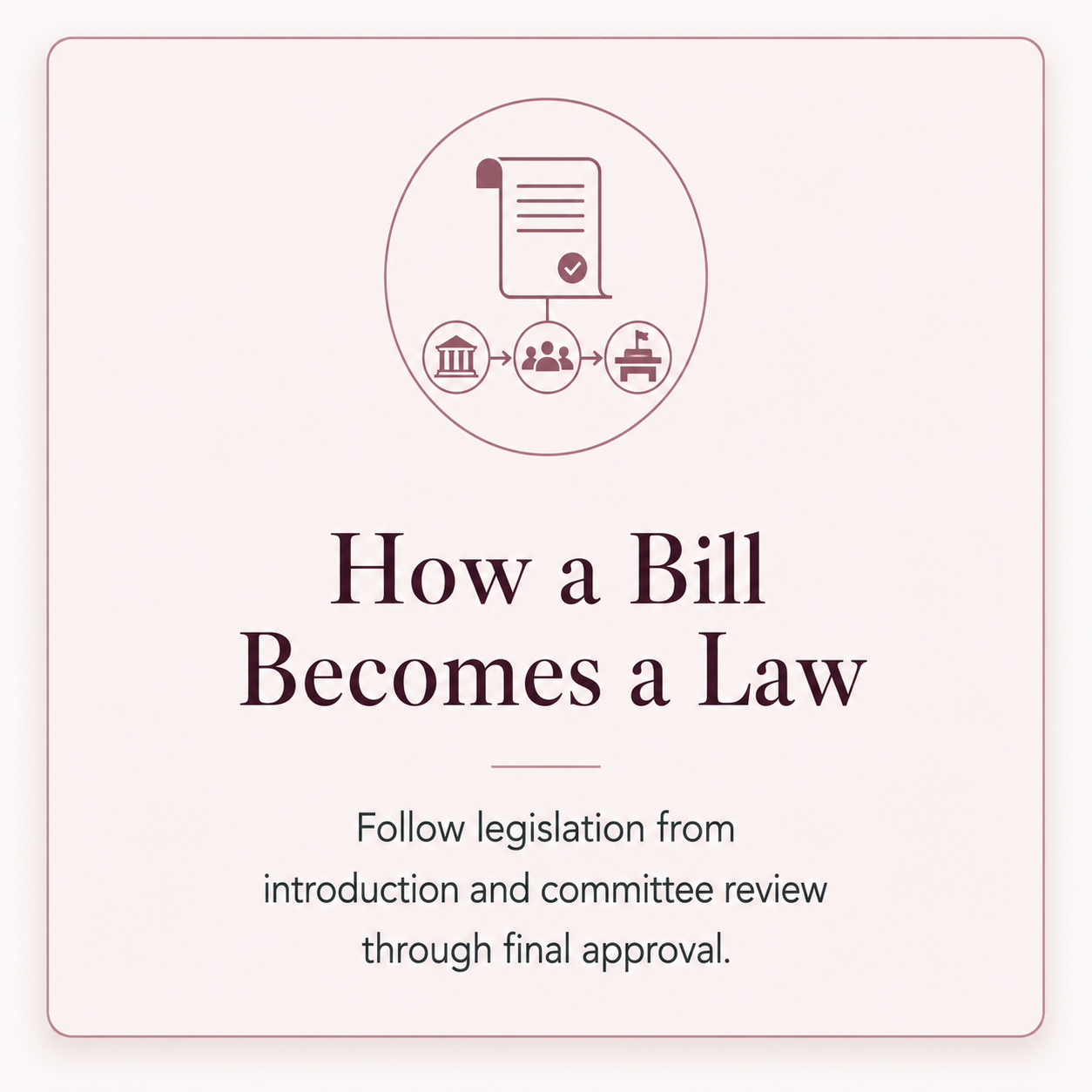
How a Bill Becomes a Law
GA bill is introduced, assigned to a committee, reviewed, debated, and voted on. If the House and Senate approve the same version, it goes to the president, who may sign it, veto it, or allow it to become law without a signature.
The Three Branches of Government
The legislative branch writes laws, the executive branch carries them out, and the judicial branch interprets them. Each branch has separate powers designed to prevent any one branch from becoming too powerful.
What Is an Executive Order?
An executive order is a directive issued by the president to manage the operations of the federal government. It does not replace legislation and may be challenged in court, reversed by a future president, or limited by Congress.
What Does the Supreme Court Do?
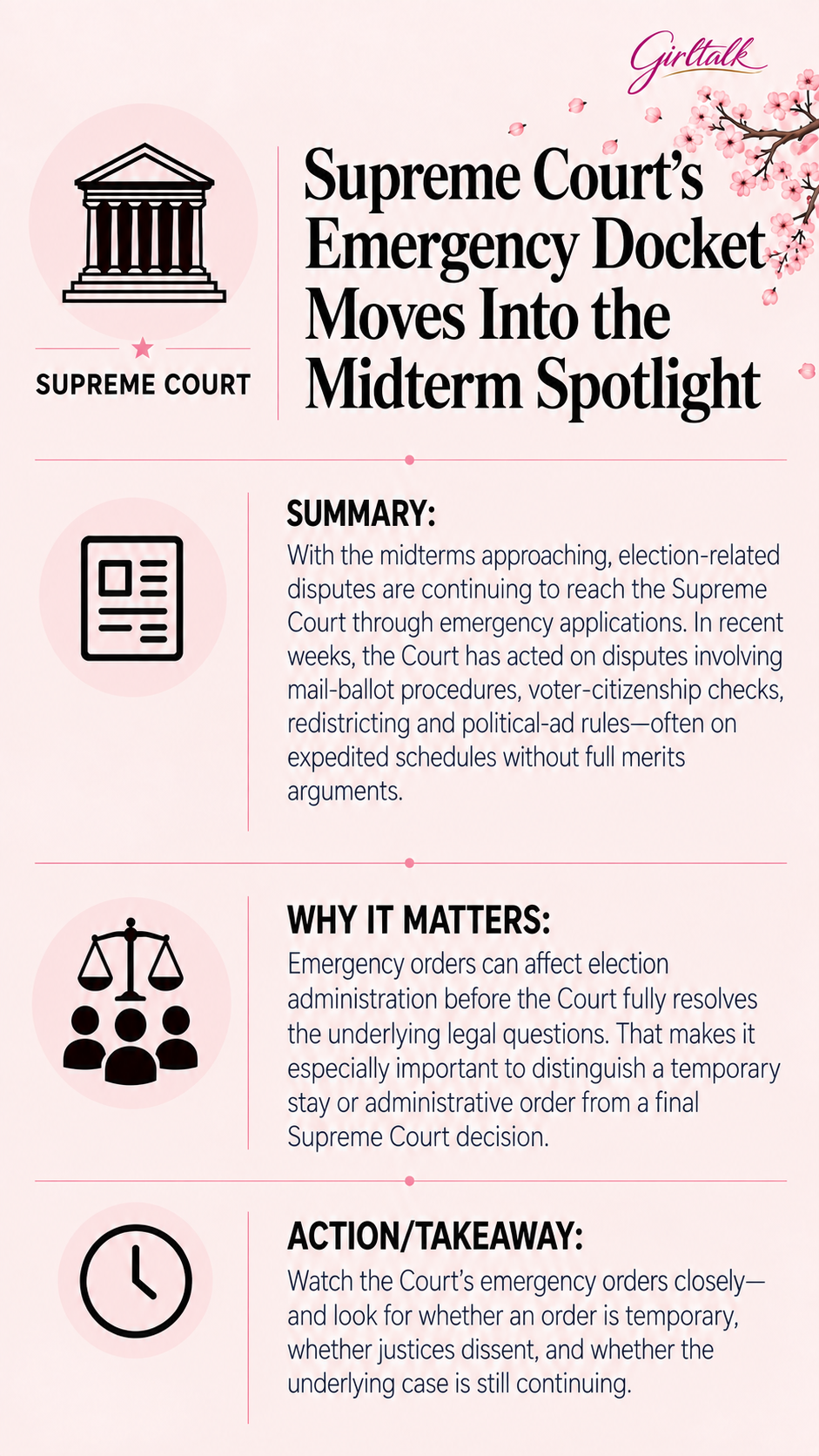
The Supreme Court reviews legal disputes involving the Constitution and federal law. Its decisions can affect voting rights, workplace protections, healthcare, education, privacy, and many other areas of everyday life.
What Is the Constitution?
The Constitution establishes the structure of the United States government, defines its powers, and protects certain rights. It is the highest legal authority in the country.
What Is the Bill of Rights?
The Bill of Rights includes the first ten amendments to the Constitution. These amendments protect freedoms such as speech, religion, assembly, due process, and protection from unreasonable searches.
What Is Redistricting?
Redistricting is the process of redrawing voting-district boundaries. These maps determine which voters are grouped together and who represents them at the congressional, state, and local levels.
Federal Government vs. State Government
The federal government handles national matters such as defense, immigration, and interstate commerce. State governments manage areas such as elections, education, licensing, and many public services.
Why Local Elections Matter
Local leaders make decisions about schools, policing, housing, transportation, public services, zoning, and community budgets. These elections often have the most immediate effect on daily life.
What happened to Sections 4 and 5 of the Voting Rights Act?
Section 4(b) contained the formula used to decide which states and local governments had to obtain federal approval before changing election rules. In Shelby County v. Holder, the Supreme Court ruled that the formula could no longer be used. Section 5 was not itself declared unconstitutional, but without a valid coverage formula, its preclearance requirement is generally not operating.
Yes. Section 2 remains federal law, but the Supreme Court’s 2026 decision in Louisiana v. Callais made certain redistricting challenges more difficult.
People challenging a voting map may now need stronger evidence that officials intentionally reduced minority voting power because of race. Showing that a map has a discriminatory effect may not be enough by itself.
This does not eliminate Section 2, but it may limit how effectively it can be used to challenge discriminatory district maps and vote dilution.
Has the Supreme Court weakened Section 2 of the Voting Rights Act?
What is the difference between a law, regulation, and executive order?
A law is passed by Congress and signed by the president or enacted over a veto. A regulation is issued by an agency under authority granted by law. An executive order directs executive-branch operations within the president’s legal authority.
A general election is the final election in which voters choose among candidates for public office. It may include federal, state, and local races, along with ballot questions.
A presidential election is a type of general election held every four years that includes the race for president and vice president. The ballot may also include races for Congress, state offices, judges, local officials, and ballot measures.
What is the difference between a general election and a presidential election?
A general election in the United States that occurs in a year when a presidential election is not held.
These elections typically include contests for congressional seats, state governorships, and various local offices.
What is an off-year election?
A provisional ballot allows a person to cast a ballot when their eligibility cannot be immediately confirmed at the polling place. Election officials later review the voter’s eligibility under federal and state law before deciding whether the ballot counts.
What is a provisional ballot?
Girltalk provides educational and inspirational content only and does not substitute professional advice.